◆ Highlight · Double rotor
One stator. Two rotors. Two air gaps.
An inner and an outer rotor share one stator with slots on both sides. Every one of the 19 rotor
designs is available as a double rotor — modelled, solved and evaluated like any other machine.
- Two air-gap elements, one result. The torque is the sum of both gaps; both windings are in series and their flux linkages add up.
- Flux straight through. Both rotors drive their flux radially outwards at the first pole, so it crosses the stator directly — the yoke can stay thin.
- Double EESM. Two field-wound rotors with both field windings in series, optimised like a single EESM.

Common yokeSlots at the bore and at the outside, two windings in series.
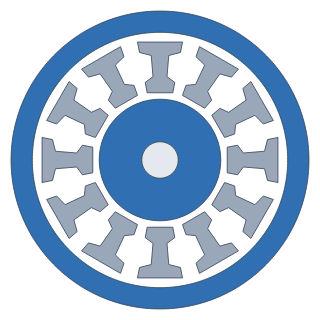
Yokeless, segmentedSeparate tooth segments from gap to gap, no yoke iron — less mass, less iron loss. Ideal for tooth-coil windings.

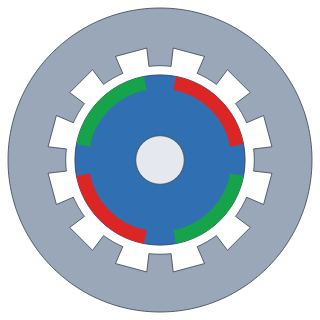 Inner runner
 Outer runner
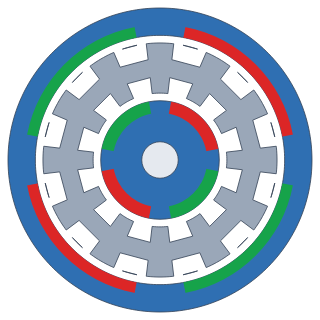 Double rotor
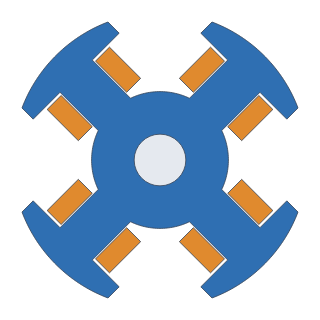 EESM
EESM PMSM
PMSM SynRM
SynRM PMa-SynRM